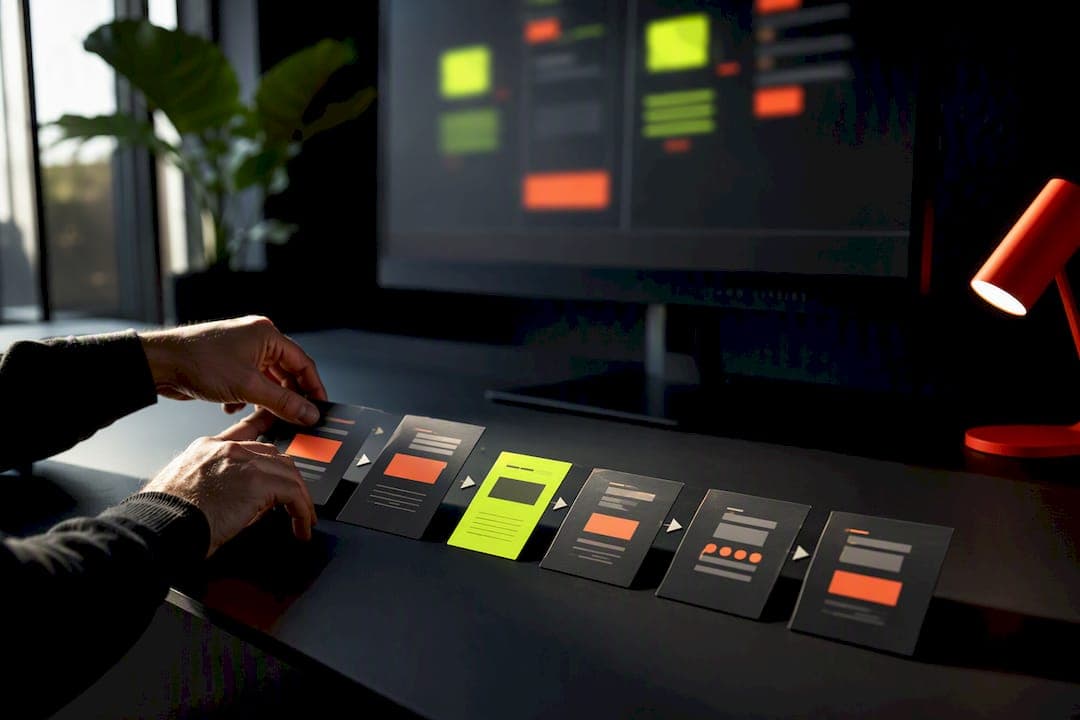
Six flows cover most of what a growing store needs: welcome series, abandoned cart, browse abandonment, post-purchase, replenishment or back-in-stock, and win-back or VIP. Build welcome and abandoned cart first. Automated flows generate between 25% and 41% of total email revenue while making up only 2% to 5% of sends, and welcome plus cart recovery typically deliver the fastest return of any pair you can build.
TL;DR:
- The most profitable flows are welcome series and abandoned cart recovery, generating between 25% and 41% of total email revenue with only 2% to 5% of sends.
- Building these key flows first allows optimized automation and faster revenue signals, avoiding the dilution of resources across less impactful sequences.
- Proper trigger definition, timing, exit conditions, and personalization are crucial for flow effectiveness, with each email focused on a single goal.
- Phased implementation over 3 weeks ensures high quality: start with welcome and cart, then layer in post-purchase, Win-back, and VIP flows as capacity allows.
- Testing, data hygiene, and segmenting audiences improve performance, with metrics like revenue per recipient and flow conversion rate indicating success.
Table of Contents
- What Are the Core Ecommerce Email Flows You Need?
- How Do You Prioritize and Roll Out These Flows?
- What Makes a Flow's Anatomy Actually Work?
- How Do You Optimize and Test Your Email Flows?
- What KPIs and Benchmarks Should You Track?
- Who Handles This If You Don't Have the Bandwidth?
- What Do Practitioners Get Wrong About Email Flows?
- Get Your Email Flows Built, Audited, or Optimized
- Sources
- FAQ
What Are the Core Ecommerce Email Flows You Need?
Each flow below has a specific job to do in the customer lifecycle. Trying to run them all with generic, one-size-fits-all content is the fastest way to waste the automation you just built. What follows is a blueprint for each one: when it fires, how many emails it needs, and what each individual email should accomplish.
-
Welcome series. This flow fires the instant someone joins your list, whether through a pop-up, checkout opt-in, or account creation. Send 3 to 5 emails over 7 to 14 days, and give each one exactly one job: introduce the brand, share your best-selling categories, tell a founder or product story, offer a first-purchase incentive, and answer common objections (shipping, returns, sizing). The Omnisend welcome series guide recommends an immediate send on signup, then spacing subsequent emails two to four days apart. Add an exit condition that pulls anyone who purchases out of the sequence and into your post-purchase flow instead. A welcome series does double duty beyond conversion. It trains new subscribers on how often you email and what to expect, which shapes their long-term engagement behavior and, indirectly, your sender reputation.
-
Abandoned cart recovery. This is the highest-converting flow most stores will ever run, because the shopper already decided to buy. Structure it as a 3-email ladder. Email one goes out about an hour after abandonment, is a plain reminder with no discount, and simply shows the cart contents. Email two lands at 24 hours and adds social proof: reviews, a UGC photo, or a testimonial addressing whatever objection likely stalled the purchase (fit, price, shipping cost). Email three arrives at 48 to 72 hours and, only if needed, includes a modest discount or free shipping offer to close the sale. This sequencing matches what the WebMedic flow research recommends, and it protects your margin by holding the discount back until the softer nudges have had a chance to work.
-
Browse abandonment. Don't confuse this with cart abandonment. A shopper who viewed a product page but never added anything to cart has shown weaker intent, so the tone needs to be softer and the ask smaller. One or two emails is enough. Focus on the specific product they viewed, show two or three related items, and skip the urgency language entirely. A hard sell here reads as pushy, because there was never a cart to "recover" in the first place.
-
Post-purchase flow. This sequence starts the moment an order is placed and typically runs four stages: order confirmation, shipping and delivery updates, a how-to-use or care email a few days after delivery, and a review request once the product has had time to make an impression. Space the review ask based on your product type. A supplement brand might wait two to three weeks; a phone case brand can ask within days. This flow is where most stores leave money on the table. It's an underused opportunity to lift repeat purchase rates and cut down on support tickets simply by answering the questions customers would otherwise email you about.
-
Replenishment and back-in-stock. For consumable products, a replenishment flow triggers based on the average time between reorders. If your data shows customers typically reorder coffee every 28 days, send a friendly reminder around day 24, before they run out and buy from a competitor. Back-in-stock flows work differently: they fire when a specific SKU a customer waitlisted becomes available again. Keep the tone helpful, not salesy. It's a favor you're doing them, not a promotion.
-
Win-back and VIP flows. Win-back targets customers who haven't purchased in a defined window, usually 60 to 120 days depending on your typical purchase cycle, and offers a reason to return: a new arrival, a bigger incentive than usual, or a "we miss you" message that feels personal rather than automated. Our operations-first win-back strategy breaks down how to recover a meaningful share of churned customers without training your whole list to wait for discounts. VIP flows work the opposite direction: they recognize your highest lifetime-value customers with early access, exclusive perks, or a genuine thank-you, which keeps your best customers from feeling like just another name on a list.
How Do You Prioritize and Roll Out These Flows?
Building every flow on this list simultaneously, with a small team, is how stores end up with six half-finished automations that nobody ever optimizes. A phased approach gets you real revenue faster and keeps quality high at each stage.
Phase 1 (weeks 1 to 3): Welcome series and abandoned cart. These two flows together often cover the cost of running your entire email program, which is exactly why they come first. Set up event tracking for signups and cart activity, build your templates, and define exit conditions (remove anyone who purchases from the cart flow immediately). Expect an initial signal within days of launch and a stabilized read on performance within two to three weeks.
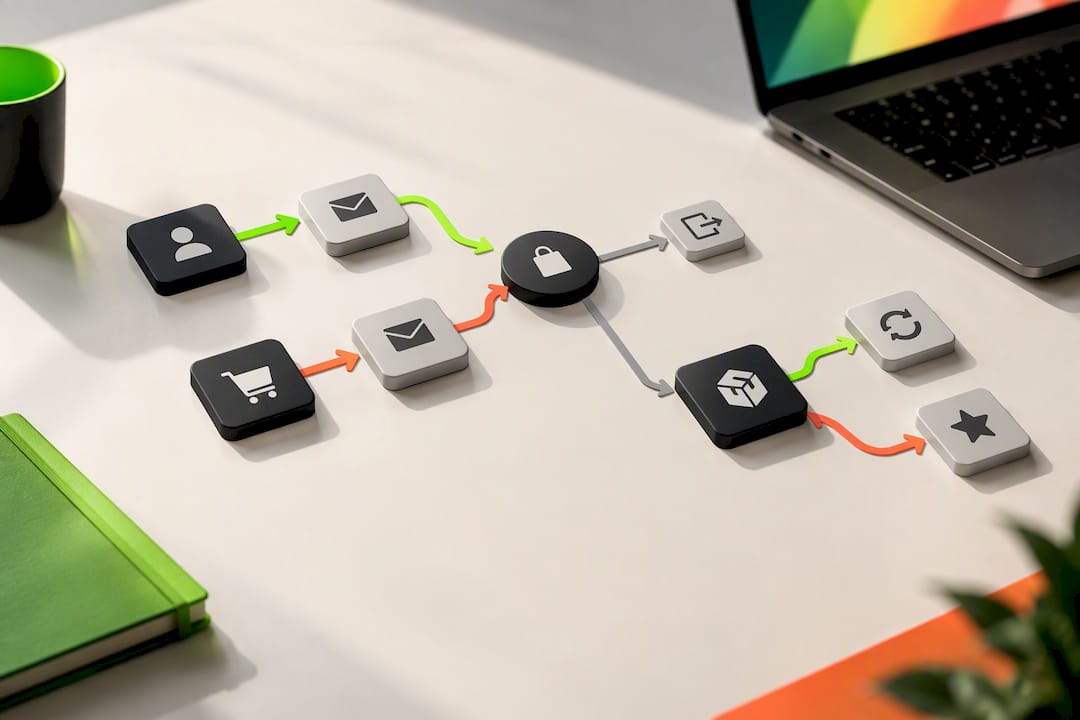
Phase 2 (weeks 4 to 6): Post-purchase and review request. Once your revenue flows are live, layer in the sequence that drives repeat purchases and social proof. This phase needs order and fulfillment data synced correctly, so budget time for QA testing shipping-status triggers before you turn it on.
Phase 3 (weeks 7+): Browse abandonment, replenishment, win-back, VIP, back-in-stock. Add these as capacity allows, prioritizing whichever matches your business model. A subscription or consumables brand should prioritize replenishment; a brand with a long consideration cycle should prioritize browse abandonment.
Per-phase checklist items to confirm before launch:
- Tracking events fire correctly (test with a dummy account or order)
- Templates are mobile-responsive and load images correctly
- Exit conditions are set so customers don't get a discount email after they've already bought
- A QA send goes to a real inbox, not just a preview pane, to catch rendering issues
Pro Tip: Run a 10% holdout group on your welcome series so you can measure true incremental lift instead of assuming every sale from a welcomed customer was caused by the emails.
This phased build order lines up with what most experienced practitioners recommend: get welcome and cart recovery fully optimized before you spread your attention across secondary flows.
What Makes a Flow's Anatomy Actually Work?
A flow is only as good as its underlying logic. Get the triggers, timing, and exit rules wrong, and even great copy won't save it.
-
Define triggers with precision. "Cart abandonment" isn't one event, it's a specific state: items added, checkout not completed, a set amount of time elapsed (commonly 30 to 60 minutes). Product view, order placed, and inventory-restocked events all need the same clear definition inside your platform, or your flows will fire at the wrong moment or not at all.
-
Respect delay and cadence. Space emails based on buyer psychology, not convenience. A cart email at hour one feels helpful; the same email at hour twelve feels like you weren't paying attention. Send in the recipient's local timezone whenever your platform supports it, since a 2 a.m. send lands at the bottom of an inbox by morning.
-
Build exit conditions and suppression rules into every flow. If a customer purchases mid-sequence, pull them out immediately. If someone already received a win-back offer in the last 30 days, suppress the next one. Frequency caps across flows (say, no more than one promotional email per day per subscriber) prevent the inbox fatigue that drives unsubscribes.
-
Collect personalization fields deliberately. First name, last purchase category, average order value, and preferred product line all make an email feel relevant rather than generic. Use them for merge tags and dynamic content blocks, but never expose sensitive purchase details in a way that would feel invasive if the customer thought about how you knew it.
The rule that ties all of this together: one job, one email. Every message in a flow should have a single goal and a single call to action. Stacking a review request, a cross-sell, and a loyalty pitch into one email dilutes all three and tends to underperform a focused version of any one of them.
How Do You Optimize and Test Your Email Flows?
Once your flows are live, the work shifts from building to improving. Testing without a plan just generates noise, so anchor every test to one variable and a clear success metric.
A/B test ideas worth running:
- Subject line framing (urgency versus curiosity versus benefit-led) on your cart recovery email, measured by open rate
- Discount placement (email two versus email three) measured by recovered revenue per recipient
- Send-time windows (immediate versus 90-minute delay) on browse abandonment, measured by click-through rate
- Plain-text versus designed template on win-back emails, measured by conversion rate
Segment before you personalize. New subscribers and returning customers need different welcome content entirely, since a returning customer doesn't need a "how to shop with us" email. High average-order-value customers respond better to early access and exclusivity than to blanket discount codes, while price-sensitive segments convert better on straightforward percentage-off offers. Product-category triggers, sending relevant content based on what someone actually browsed, consistently outperform generic batch-and-blast segments.
Deliverability hygiene isn't optional. Confirm your SPF, DKIM, and DMARC records are properly configured before you scale sending volume. Suppress addresses that generate spam complaints, and monitor for spam-trap hits, which quietly tank your sender reputation over months. Run periodic inbox-placement checks across Gmail, Outlook, and Yahoo so you catch a filtering problem before it costs you real revenue.
Pro Tip: Save the discount for last. Lead with a plain reminder, follow with social proof or a use-case, and only offer a discount if the first two emails don't convert. Leading with a discount trains customers to wait for one every time.
If you're running paid retargeting alongside these flows, coordinate the messaging so a shopper doesn't see a discount in their inbox and a full-price ad on Instagram in the same afternoon. Our guide to Meta ads for ecommerce covers how to sync offer timing across channels.
What KPIs and Benchmarks Should You Track?
Revenue per recipient (RPR) is the single most useful metric for comparing flows against each other, since it accounts for both open behavior and conversion rate in one number. Track it alongside flow conversion rate (orders divided by emails delivered), cart recovery rate (recovered carts divided by total abandoned carts), repeat purchase rate attributable to your post-purchase flow, and unsubscribe or spam-complaint rate as your guardrail metric.
Automated flows generate 4 times the revenue per recipient of standard broadcast campaigns, despite making up only a small slice of total send volume. If your flows aren't outperforming your broadcasts on a per-recipient basis, something in the setup needs attention before you add more flows.
Apply benchmark ranges cautiously. A 25% to 41% share of email revenue coming from flows is a healthy target, not a guarantee, and your starting point depends heavily on how much broadcast email you're already sending. A store that emails daily will see a smaller relative flow share than one that emails twice a month, even if the flows themselves are performing well.
Build a simple weekly reporting layout: a cohort table showing signups, cart abandoners, and orders by week, next to a month-over-month view of RPR and recovery rate per flow. That structure catches a declining trend early instead of six months into it.
Who Handles This If You Don't Have the Bandwidth?
Building flows correctly takes ongoing attention: copy refreshes, segment updates, deliverability monitoring, and testing that never really stops. Crowdcompany's retargeting and email marketing service exists for stores that want these flows running without adding it to an already full plate.
The relevant pieces of a full build include CRM and lead automation to keep your customer data clean and trigger-ready, retargeting and email marketing for the flows themselves, landing page work so the click-through experience matches the email's promise, and creative production for the photography and copy that make each send convert.
An agency-ready checklist for this kind of engagement typically covers:
- Audit of current flows, tracking setup, and list health
- Build and QA across every trigger, delay, and exit condition
- Copy and template production aligned to brand voice
- 30, 60, and 90-day optimization checkpoints with reporting tied to revenue, not opens
If you're evaluating platforms for this kind of build, our comparison of Omnisend and Klaviyo breaks down which features matter most for flow-heavy ecommerce programs.
What Do Practitioners Get Wrong About Email Flows?
The most common mistake is trying to launch six flows at once instead of two done well. A close second is cramming three goals into one email: a review request, a cross-sell, and a loyalty pitch never work as well together as they would separately. Ignoring exit conditions is the third, and it's the one that generates angry replies, when a customer gets a "still thinking it over?" email an hour after they already checked out.
Realistic 90-day expectations: early signal on welcome and cart flows within two to three weeks, stabilized metrics by day 60, and meaningful lifecycle coverage (post-purchase, win-back) by day 90 if you stuck to the phased build. This week, audit your exit conditions and launch whichever of the two priority flows you don't already have running.
— E
Get Your Email Flows Built, Audited, or Optimized
If you're running a store with no flows live yet, or a partial setup nobody's touched since launch, the gap between where you are and a working welcome-plus-cart-recovery system is smaller than it feels. Email automation can be handled as part of a broader growth engine, sometimes priced with flat monthly fees per service and no long-term contract, so you're not locked into a retainer while you find out if the work is any good.
The typical engagement starts with an audit of your existing flows (or lack of them), moves into build and QA on welcome and abandoned cart first, then expands into post-purchase, win-back, and VIP flows as those two prove out. Reporting stays focused on recovered revenue and repeat purchase rate, not opens and clicks that don't pay the bills. If your product pages or checkout need work to support what the emails promise, our website and landing page team handles that under the same roof.
Everything runs in-house, no offshore handoffs, with monthly reporting tied to leads and revenue. Check out the full list of services and tell us where your flows currently stand.
Sources
The benchmark figures and structural recommendations in this article draw on a handful of sources worth reading directly. The Omnisend 2025 ecommerce marketing report is the source for the revenue-share and revenue-per-recipient benchmarks. Omnisend's welcome series guide breaks down timing and example copy in more depth than fits here. CommerceV3's flow guide lays out the prioritization order for a full lifecycle program, and WebMedic's flow post covers the abandoned cart ladder and deliverability hygiene in step-by-step detail. For a broader view on scaling automated channels alongside content, Babylovegrowth's ecommerce SEO playbook is a useful companion read.
FAQ
What Are the 5 Essential Email Flows for Ecommerce?
Most practitioners point to welcome series, abandoned cart, post-purchase, browse abandonment, and win-back as the five with the broadest impact. Replenishment and VIP flows round out a mature program, but the core five cover most of the customer lifecycle on their own.
What Are the Disadvantages of Using Flodesk for Ecommerce Flows?
Flodesk was built primarily for creators and small service businesses, so it lacks the deep ecommerce-specific triggers (browse abandonment, product-level personalization, revenue attribution by flow) that platforms built for online stores offer. Stores with growing catalogs typically outgrow it once they need granular segmentation by purchase behavior.
What Is the 30/30/50 Rule for Cold Emails?
This rule applies to cold outreach and B2B prospecting, not ecommerce lifecycle flows, so it isn't directly relevant to welcome or cart-recovery sequences. If you're running cold outreach separately from your customer email flows, that's worth treating as its own strategy rather than folding into automated ecommerce sends.
What Is the 3 Email Rule?
Definitions vary depending on the source, but the version most relevant to ecommerce is the 3-email abandoned cart ladder: a reminder, a social-proof follow-up, and a discount offer if the first two don't convert. That structure is the one WebMedic's flow research recommends as the standard cart recovery sequence.
How Much Does It Cost to Have Email Flows Managed for You?
Crowdcompany prices retargeting and email marketing at $500 per month as a standalone service, with no long-term contract required. That covers ongoing build, testing, and optimization rather than a one-time setup fee.